

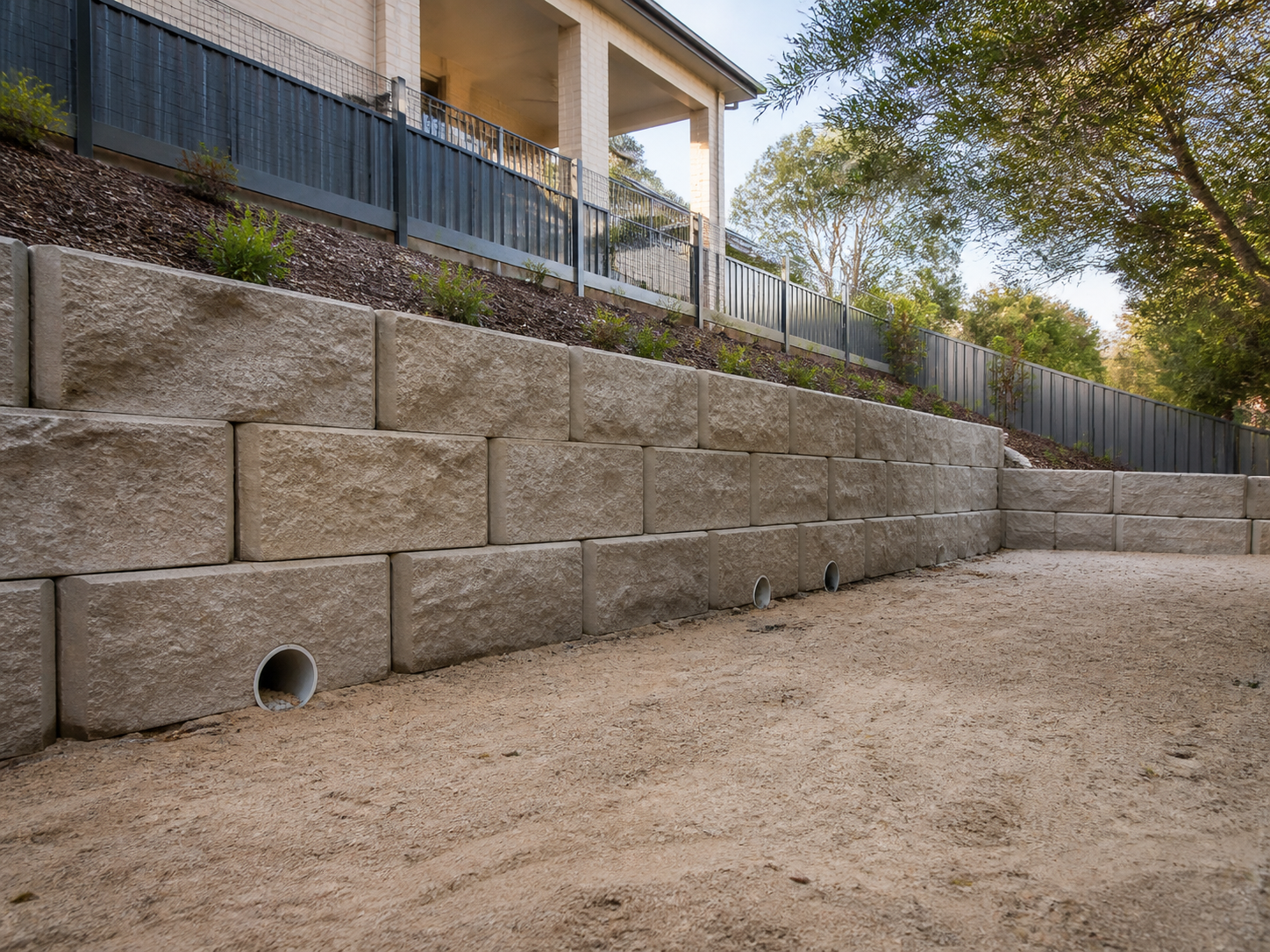
 AI-assisted editorial photograph created by Think Property Club.
A site can look cheap until the ground tells the truth. Sloping land, runoff, access and boundary levels can all create costs that do not appear in the marketing copy.
This guide explains why retaining walls and drainage should be checked before the deal gets serious.
Why Ground Conditions Matter
A flat-looking deal on paper can still need substantial earthworks, retaining or drainage once the site is measured properly.
Retaining Walls Are Not Cosmetic
Retaining walls can be structural, expensive and compliance-heavy. They can affect access, design, approvals and neighbour relations.
Drainage Can Change Everything
Stormwater handling, fall across the block, easements and council requirements can all create extra works and time.
The Budget Trap
Beginners often allow for the obvious build cost but not the ground work that sits around it. That mistake can make a project look profitable when it is not.
How To Check Early
Look for slope, runoff, cut and fill, easements, known flood issues and any signs that civil or engineering input will be needed. If the site looks tricky, assume the numbers will move.
Quick Checklist
- Site slope
- Cut and fill
- Retaining need
- Stormwater path
- Easements
- Civil cost allowance
- Engineer review if needed
Common Mistakes To Avoid
- Assuming flat land from the photo
- Ignoring runoff and drainage
- Forgetting wall engineering
- Not allowing for council conditions
- Thinking small earthworks are always cheap
Example: How This Plays Out In A Real Deal
Imagine an investor finds a property that looks promising from the street. The land size seems right, the suburb has demand, and the listing agent hints there may be development upside.
That is only the beginning.
The investor still needs to check whether the strategy is supported by the planning controls, whether the numbers hold up after real costs, and whether the finished product has enough buyer or tenant demand. A good-looking property can become a weak deal if one key assumption is wrong.
This is why the first pass should be calm and methodical. The investor is not trying to prove the deal works. They are trying to find out whether it deserves more time.
Questions To Ask Before You Move Forward
Before spending money on deeper reports or presenting the opportunity to someone else, work through these questions:
- What is the exact strategy being tested?
- What rule, map, comparable sale or specialist advice supports that strategy?
- What are the biggest unknowns?
- What cost could most easily blow out?
- What timing risk could affect the deal?
- What would make you walk away?
- Who needs to confirm the assumptions before the deal becomes serious?
These questions make the process cleaner. They also make it easier to explain the deal to a mentor, partner, finance broker or specialist without sounding vague.
How This Fits The Wholesale Property Strategy
The wholesale property approach is not about hoping a property goes up in value after you buy it. It is about learning how to identify value before the market fully prices it in, then structuring the opportunity properly.
That means the skill is not only finding property. The real skill is filtering.
A strong investor can look at more opportunities without becoming emotionally attached to every one. They can move quickly because they know what to check. They can also walk away quickly when the numbers, planning pathway or risk profile does not support the deal.
That is the difference between being busy and being effective.
What To Do Next
If a deal still looks promising after the first pass, the next step is to document the assumptions clearly.
Write down the strategy, the site details, the planning checks completed, the early feasibility, the main risks and the specialist advice still required. This does not need to be fancy. It needs to be clear.
The clearer the deal is, the easier it becomes to make a decision.
Final Word
Think Property Club helps investors learn to see the hidden site costs before they become budget blowouts.
Property is powerful, but it rewards process. The investors who last are usually the ones who learn how to slow down, check the right things and move quickly only when the evidence supports the deal.
Watch The Free Training
Watch the free Think Property Club training and learn how everyday Australians are using the wholesale property system to find, assess and structure high-profit property opportunities.
Watch the free masterclass →Frequently asked questions
What should investors know about Why Ground Conditions Matter?
A flat-looking deal on paper can still need substantial earthworks, retaining or drainage once the site is measured properly.
What should investors know about Retaining Walls Are Not Cosmetic?
Retaining walls can be structural, expensive and compliance-heavy. They can affect access, design, approvals and neighbour relations.
What should investors know about Drainage Can Change Everything?
Stormwater handling, fall across the block, easements and council requirements can all create extra works and time.
What should investors know about The Budget Trap?
Beginners often allow for the obvious build cost but not the ground work that sits around it. That mistake can make a project look profitable when it is not.
What should investors know about How To Check Early?
Look for slope, runoff, cut and fill, easements, known flood issues and any signs that civil or engineering input will be needed. If the site looks tricky, assume the numbers will move.
Rate this article
How useful did you find this article? 1 is poor and 5 is great.
Join the conversation
Your email address will not be published.
Loading comments…