NSW Seniors Housing Changes: Turn Low and Mid-Rise Potential into a Real Site Test
A larger seniors-housing envelope can make a well-located NSW site look immediately attractive, but a headline floor-space ratio is only the start of the investigation. Capable developers look deeper at eligibility, accessible design, hazards, operations and resident demand because each issue can change the buildable and bankable outcome. Test them together and the apparent complexity becomes a practical site decision.
Start with what the amendment actually does
NSW Planning states that Housing SEPP amendments made on 24 April 2026 allow seniors housing in Low and Mid-Rise Housing Policy areas to use the relevant non-discretionary building-height and floor-space-ratio standards. The same official page identifies exclusions and accessibility considerations. For developers, this creates a reason to rescreen suitable sites—not a reason to assume that every property near a centre or station now supports the same outcome.
Prove the land is genuinely eligible
Check the exact Low and Mid-Rise Housing area, zoning, nominated centre or station relationship, exclusions and hazard mapping. A nearby boundary is not enough. Heritage, bushfire, flood, evacuation and aircraft-noise constraints can materially change the pathway. Put the parcel, current mapping and written planning advice together before you let a headline floor-space ratio shape the acquisition price.
Design for the resident before chasing the envelope
Seniors housing feasibility depends on accessible circulation, adaptable dwellings, safe gradients, usable communal areas, parking and proximity to services. These requirements affect net saleable area and construction cost. Bring an experienced designer into the site test early, because a scheme that works for the intended resident is more valuable than a theoretical envelope that cannot be delivered comfortably, safely or efficiently.
Make the operating model do real work
Clarify whether the project is intended for sale, rental, retirement-village operation or another permitted model. Management, service and tenure assumptions affect finance, valuation, legal documentation and exit demand. Speak with the relevant legal, finance, valuation and operating specialists before committing. The goal is to connect planning potential to a credible delivery and exit strategy—not to postpone the hard commercial questions.
TPC deal lens: align planning, people and product
A compliant envelope is only the opening screen. Prefer locations where intended residents can reach health, retail and transport services easily and where an experienced operator or sales strategy can be evidenced. This may not kill the deal—it may simply change how you structure it. If eligibility, accessible design and the operating model align under conservative assumptions, keep building the evidence; if one element remains weak, redesign, renegotiate or move on.
Your NSW seniors housing action checklist
- Confirm the current Housing SEPP provisions and Low and Mid-Rise mapping for the exact property.
- Check zoning, centre or station relationships, exclusions and all relevant hazard mapping.
- Obtain written planning advice and an early accessible-design concept for the site.
- Test circulation, gradients, adaptable dwellings, parking, communal areas and access to services.
- Define the intended tenure, management, service, finance and exit model with qualified advisers.
- Model conservative net saleable area, construction cost, program, finance cost, contingency and demand.
- Have a property lawyer protect unresolved due diligence and recheck the rules before settlement and lodgement.
Key Takeaway
Investigate the current Housing SEPP, Low and Mid-Rise mapping, title, hazard maps, access requirements, Seniors Housing Design Guide and the economics of the intended tenure or operating model. Obtain site-specific professional advice from a planner, accessible-design specialist, architect, operator or sales adviser, valuer, finance adviser and property lawyer as relevant. Early due diligence improves the decision by showing whether constraints can be designed around, addressed through operations, protected in the contract, negotiated with the vendor or reflected in the land price.
Successful developers do not treat accessibility, planning eligibility or operating risk as details to solve later. They identify what the future resident and the approval pathway require, understand the commercial effect, and manage it before the acquisition becomes unconditional.
Your Turn
Would you walk away from a constrained seniors-housing site, or first investigate whether the right design and operating strategy could make it workable?
Sources and image record
- NSW Planning — Seniors housing — accessed 29 August 2026.
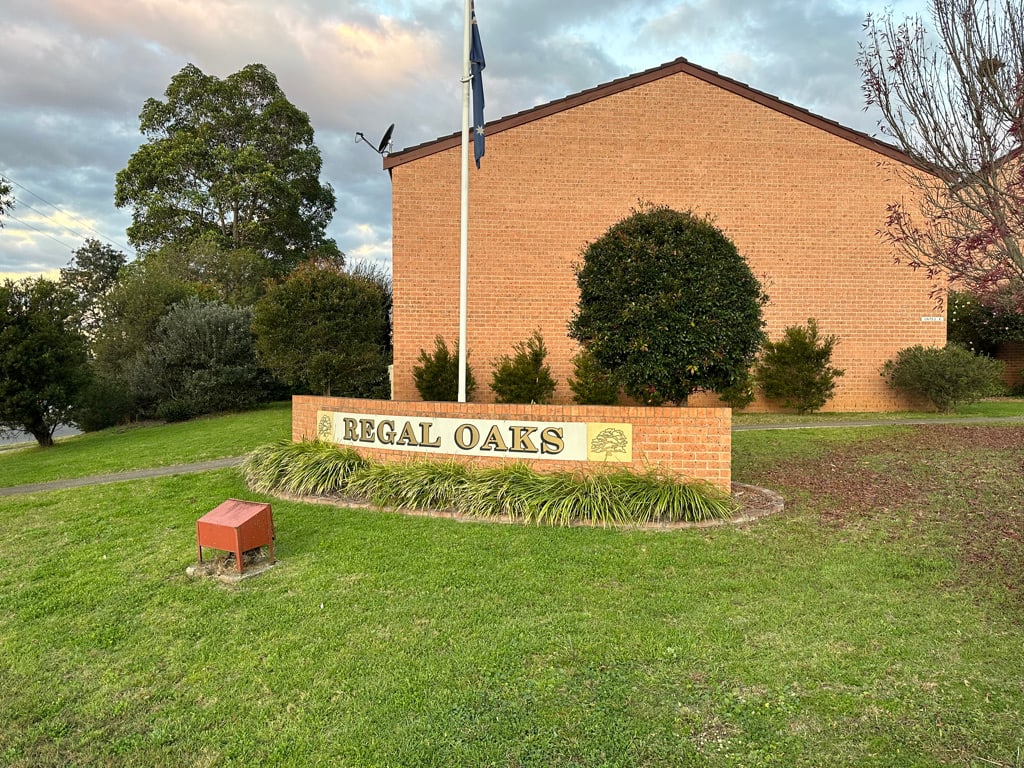
- Feature photograph: “Regal Oaks Retirement Village 02” by Chris.sherlock2. Exact source page. Licence: Creative Commons Attribution-ShareAlike 4.0 International. Accessed 30 August 2026. Required attribution: “Regal Oaks Retirement Village, Wallacia, NSW. Photo by Chris.sherlock2, licensed under CC BY-SA 4.0, via Wikimedia Commons.” Resized and compressed for web; no compositional edits.

General educational information only. Obtain independent legal, financial, tax, planning and building advice for the specific property and proposal.
Frequently asked questions
What should investors know about Start with what the amendment actually does?
NSW Planning states that Housing SEPP amendments made on 24 April 2026 allow seniors housing in Low and Mid-Rise Housing Policy areas to use the relevant non-discretionary building-height and floor-space-ratio standards. The same official page identifies exclusions and accessibility considerations. For developers, this creates a reason to rescreen suitable sites—not a reason to assume that every property near a centre or station now supports the same outcome.
What should investors know about Prove the land is genuinely eligible?
Check the exact Low and Mid-Rise Housing area, zoning, nominated centre or station relationship, exclusions and hazard mapping. A nearby boundary is not enough. Heritage, bushfire, flood, evacuation and aircraft-noise constraints can materially change the pathway. Put the parcel, current mapping and written planning advice together before you let a headline floor-space ratio shape the acquisition price.
What should investors know about Design for the resident before chasing the envelope?
Seniors housing feasibility depends on accessible circulation, adaptable dwellings, safe gradients, usable communal areas, parking and proximity to services. These requirements affect net saleable area and construction cost. Bring an experienced designer into the site test early, because a scheme that works for the intended resident is more valuable than a theoretical envelope that cannot be delivered comfortably, safely or efficiently.
What should investors know about Make the operating model do real work?
Clarify whether the project is intended for sale, rental, retirement-village operation or another permitted model. Management, service and tenure assumptions affect finance, valuation, legal documentation and exit demand. Speak with the relevant legal, finance, valuation and operating specialists before committing. The goal is to connect planning potential to a credible delivery and exit strategy—not to postpone the hard commercial questions.
What should investors know about TPC deal lens: align planning, people and product?
A compliant envelope is only the opening screen. Prefer locations where the intended residents can reach health, retail and transport services easily and where an experienced operator or sales strategy can be evidenced. If eligibility, accessible design and the operating model align under conservative assumptions, keep building the evidence. If one element remains weak, resolve it or move on without forcing the deal.
Rate this article
How useful did you find this article? 1 is poor and 5 is great.
Join the conversation
Your email address will not be published.
Loading comments…