
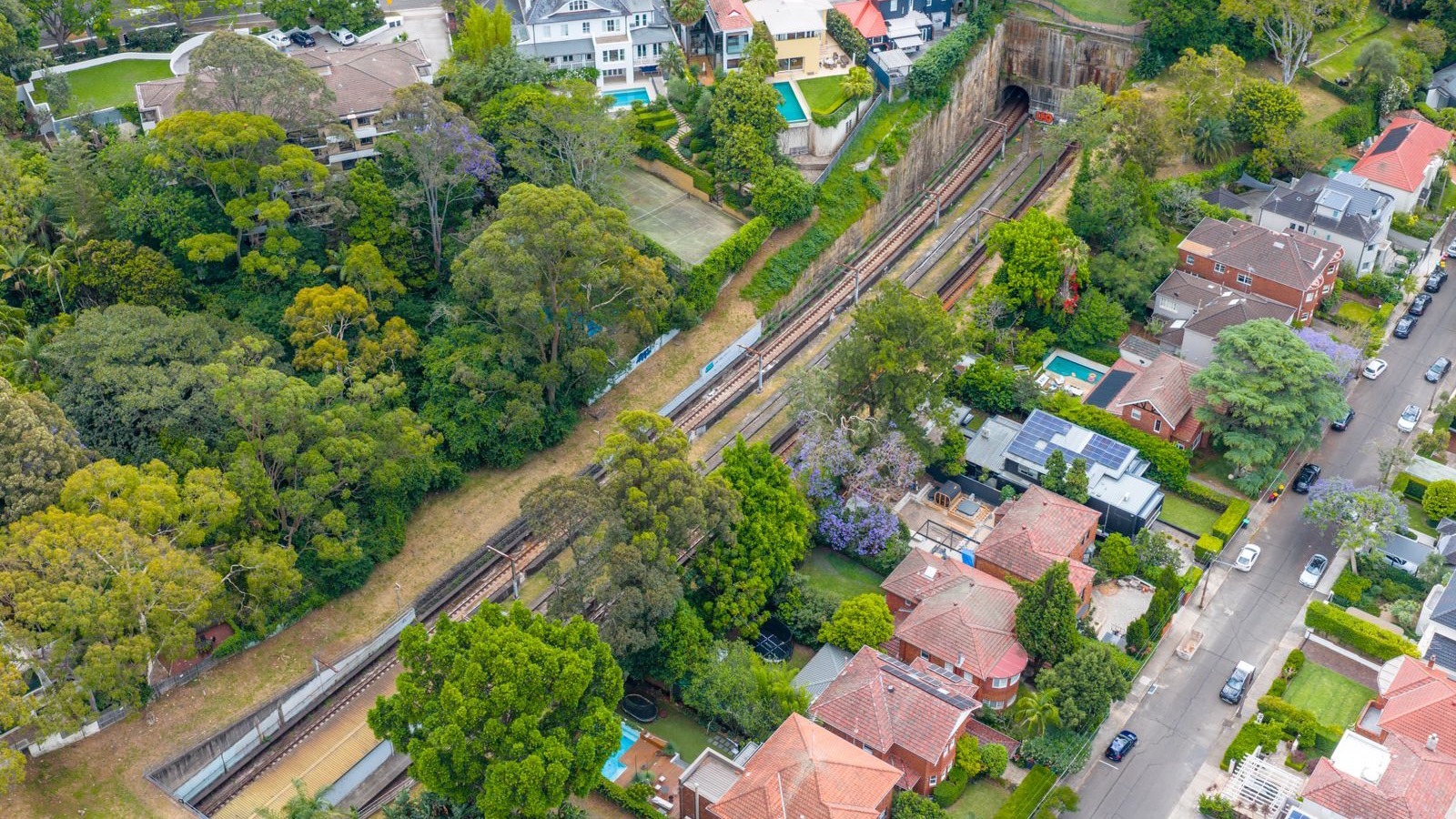
Noise And Yield: Distance to the corridor is a feasibility input
A block beside the rail line or on a main road often looks like the best value on the street. It is cheaper for a reason, and the reason is usually written in a planning instrument rather than in the agent's advertisement. In New South Wales, that clause can do more to your yield than zoning or setbacks, because it can force you to change what you build rather than how you build it.
The deal question: will the consent authority be able to consent?
For residential accommodation on qualifying land, the State Environmental Planning Policy (Transport and Infrastructure) 2021 does not merely require the consent authority to consider noise. It requires the authority not to grant consent unless it is satisfied that appropriate measures will be taken to ensure the internal noise levels are not exceeded. The rail provisions deal with the impact of rail noise or vibration on non-rail development and with excavation in or adjacent to rail corridors; the road provisions deal with the impact of road noise or vibration on non-road development. The full instrument is on the NSW legislation website.
That is a different question from "can I mitigate it". It is "will the authority be satisfied" — and that judgement is made on the acoustic evidence and the design in front of it.
What the criteria mean in practice
The internal criteria that matter most are 35 dB(A) in bedrooms between 10 pm and 7 am and 40 dB(A) elsewhere in the residential accommodation other than a garage, kitchen, bathroom or hallway, at any time. The Department's planning circular PS 21-018 explains that the interim guideline for development near rail corridors and busy roads supports the relevant SEPP clauses, must be taken into consideration before determining a relevant application, and exists to ensure residential development adjacent to rail corridors and busy roads meets those internal criteria. Transport for NSW identifies clause 2.120 as the provision setting the current requirements for noise-sensitive developments.
Those are internal levels with windows closed. Which means the design question arrives immediately: how does the room stay habitable in summer with the windows shut?
What triggers it on a specific block
The road trigger is a road in or adjacent to the corridor of a freeway, tollway or transitway, or any other road with an annual average daily traffic volume of more than 20,000 vehicles, based on Transport for NSW's published traffic volume data, where the consent authority considers the development likely to be adversely affected. The rail trigger is land in or adjacent to a rail corridor, with a separate concurrence requirement for excavation in or adjacent to that corridor.
The practical step is to read the published traffic volume data for the exact stretch of road in front of the site — not the suburb average, not the whole road. Volume changes along a single carriageway, and the difference between the two sides of an intersection can be the difference between a routine approval and an acoustic-designed building.
The trap: solving it with glazing
The expensive mistake is designing a standard building and then trying to buy your way to compliance. Heavier glass, thicker walls and mechanical ventilation are all legitimate, but if the bedrooms face the corridor with openable windows, you are paying to fix a problem that layout could have avoided.
The second trap is ignoring the interaction with openable windows. In practice designs often have to show that internal levels can still be within the criteria when windows are open to a defined extent, which constrains which rooms can face the noise source at all. By the time you discover that, your unit mix and your layouts are set.
How a student would work it through
- Identify every noise source that could trigger a clause: the rail corridor, freeways, tollways, transitways, and each fronting road.
- Check the published traffic volume data for each road segment against the threshold, and record the source.
- Commission a site-specific acoustic assessment early enough to inform the concept, covering rail and road, airborne and ground-borne.
- Ask the acoustician what the criteria mean for building orientation, window area and ventilation — not just for glass specification.
- Test whether the yield still works with the affected rooms relocated or the building stepped back, and price the treatment that remains.
- Check the council's development control plan for additional acoustic requirements, which often exceed the SEPP.
For a Think Property Club student, this is the discipline that pays: the noise clause is checked at the screening stage, in the same pass as zoning, overlays and services, so it is priced into the offer rather than absorbed after exchange.
Cost, timing and feasibility
Cost the acoustic report, the treatment and the yield you might lose. Then ask whether the discount you are being offered for the noisy block actually compensates you for both. On a site where one bedroom must move to the quiet side, the real cost is not the glazing — it is the layout compromise and the smaller building that fits the compliant arrangement.
Practical next steps
- Map every potential noise source and the qualifying road segments before you inspect.
- Download the published traffic volume data and save the extract with the date you read it.
- Engage an acoustician before the concept design, not after the DA is lodged.
- Confirm the council DCP requirements in addition to the SEPP criteria.
- Price the acoustic treatment and any yield loss into your offer ceiling, and record the reasoning in your decision log.
Sources and boundaries
Sources checked 21 September 2026. Jurisdiction and limits: New South Wales only, and the requirements described are those in the State Environmental Planning Policy (Transport and Infrastructure) 2021 and the related interim guideline, as in force at the checked date. Specific criteria, thresholds, qualifying roads and concurrence requirements can change, and councils may impose additional acoustic requirements through their development control plans. Ground-borne noise, vibration and excavation concurrence requirements depend on the relationship of the specific site to the corridor and can only be assessed by a qualified acoustic engineer and confirmed with the consent authority, Transport for NSW or the rail authority.
- NSW legislation — State Environmental Planning Policy (Transport and Infrastructure) 2021 (ss 2.98–2.100 rail; ss 2.119–2.120 road noise). Used for: the provisions on excavation in or adjacent to rail corridors, impact of rail noise or vibration on non-rail development, and impact of road noise or vibration on non-road development (Checked 21 September 2026)
- NSW Department of Planning and Environment — planning circular PS 21-018, development near rail corridors and busy roads interim guideline. Used for: that the guideline supports ss 2.98, 2.99, 2.100, 2.120 and 2.121, must be taken into consideration before determining a relevant application, and covers excavation concurrence and internal noise criteria (Checked 21 September 2026)
- Transport for NSW — reducing road traffic noise (SEPP criteria and the traffic volume maps). Used for: that clause 2.120 of the Transport and Infrastructure SEPP sets the mandatory requirements for noise-sensitive development on qualifying roads (Checked 21 September 2026)
This article is general education, not personalised planning, legal, financial, tax, privacy, safety or building advice. Requirements and outcomes vary by jurisdiction, site, contract, structure and circumstances. Check current information with the relevant authority and appropriately qualified advisers.
 Learn with Jason & AmyBuild practical small-scale property development skills with experienced mentors.Enquire now
Rate this article
Guest rating: select 1 star for poor or 5 stars for great. No account is required.
Leave a comment
Join the discussion. Your email address will not be published.
Frequently asked questions
What noise criteria actually have to be met?
For residential accommodation on qualifying land, the Transport and Infrastructure SEPP requires, among other things, that LAeq levels not exceed 35 dB(A) in any bedroom between 10 pm and 7 am and 40 dB(A) anywhere else in the residential accommodation other than a garage, kitchen, bathroom or hallway, at any time. Those are internal levels, so the question becomes what building fabric and ventilation are needed to achieve them with the windows closed.
Which roads and rail lines trigger the requirement?
The road provision applies to land in or adjacent to the corridor of a freeway, tollway or transitway, or any other road with an annual average daily traffic volume of more than 20,000 vehicles based on Transport for NSW's published traffic volume data, where the consent authority considers the development likely to be adversely affected by road noise or vibration. There is a separate clause for land in or adjacent to a rail corridor, and excavation near rail corridors has its own concurrence requirement.
Why is this a developer issue rather than a glazing detail?
Because the consent authority cannot grant consent to residential accommodation on qualifying land unless it is satisfied the criteria will be met, and because the cheapest way to meet internal criteria is often to change the design — orientation, window sizes, layout, or mechanical ventilation — rather than to specify heavier glazing on rooms that should not have been facing the corridor with openable windows in the first place.
Does a noise report settle it?
A report is evidence, not a result. The acoustic assessment needs to be site-specific, address both rail and road sources where both exist, and deal with ground-borne as well as airborne noise — the interim guideline addresses ground-borne noise for residential buildings near rail tunnels, where limiting train pass-bys to a maximum level is part of the design. Get the report before you commit to a unit mix, not after.
What should I check before I make an offer?
Four things: whether the site is in or adjacent to a rail corridor; the published traffic volume for each fronting road against the 20,000 vehicles per day threshold; what the council's development control plan requires for acoustic treatment in addition to the SEPP; and whether excavation near the corridor will need concurrence. Then price the acoustic treatment and the possible loss of a habitable room to the wrong side of the building.
Loading comments…