
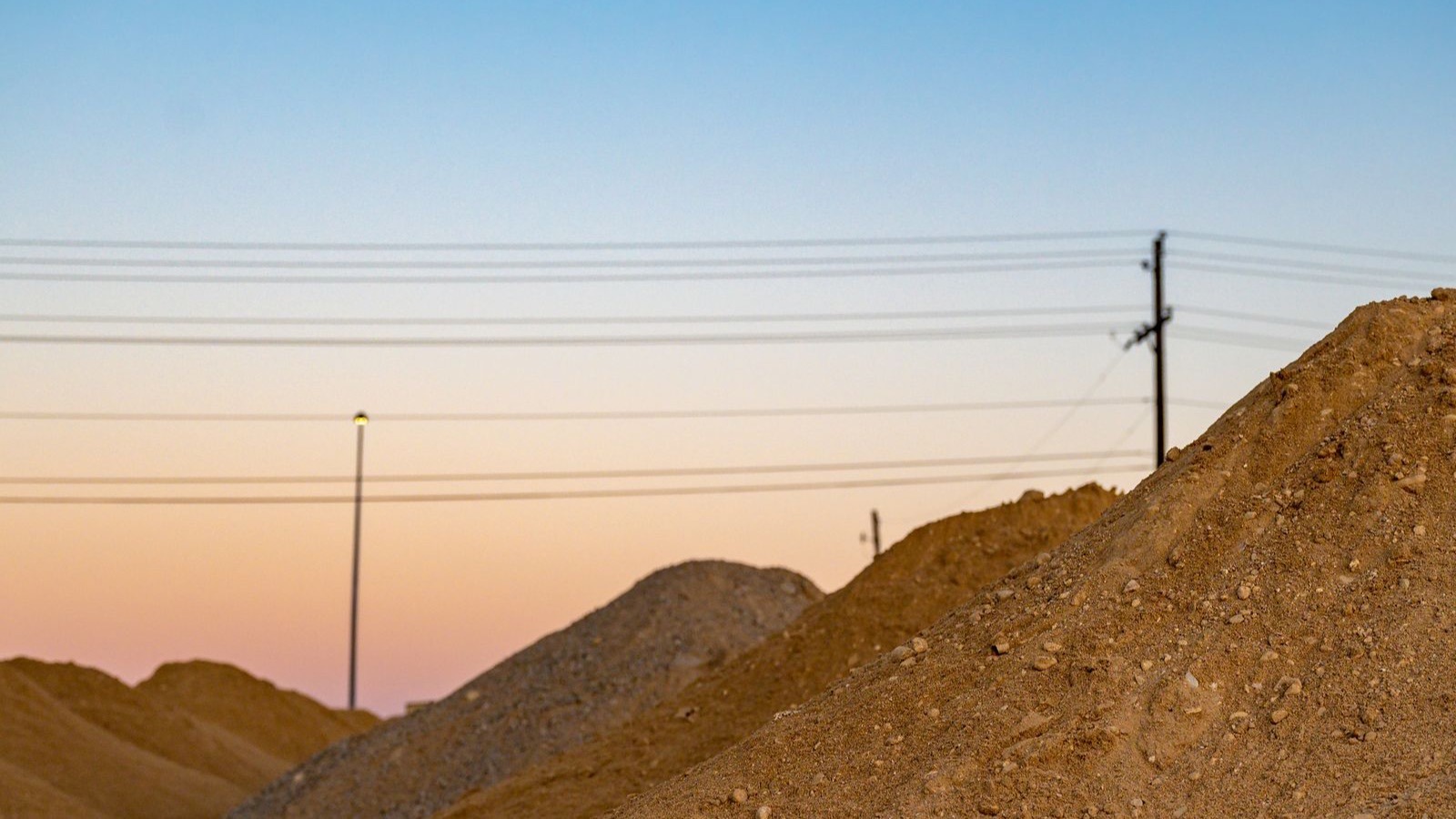
Soil Classification: The dirt is a budget line, not a leftover
Ask a developer what their basement costs and they will talk about concrete, waterproofing and the crane. Rarely about where the dirt goes. But a single-level basement on a modest infill site can produce several hundred tonnes of excavated material, and the difference between one classification and another is charged per tonne — with a levy on top. This is one of the few site costs you can genuinely control, and it is decided before a machine arrives.
The deal question: is the soil clean or is it waste?
The question is not whether the soil is dirty. It is what class of waste it is, because that determines which facility will take it and at what rate. In New South Wales the generator of the waste is responsible for classifying it under the Protection of the Environment Operations Act 1997 and the EPA's guidelines, and the six classes run from special and hazardous waste through restricted solid waste to general solid waste.
The commercially important class is virgin excavated natural material. The EPA defines VENM as natural clay, gravel, sand, soil or rock fines excavated from an area not contaminated by manufactured chemicals or process residues from industrial, commercial, mining or agricultural activity, containing no sulfidic ores or other waste. When VENM is waste it is pre-classified as general solid waste (non-putrescible) — and it attracts a lower levy.
What the number actually is
From 1 July 2026 the waste levy rates are $180.20 per tonne in the Metropolitan Levy Area and $103.80 per tonne in the Regional Levy Area. The concessional VENM rates are $162.20 and $93.40 per tonne respectively. The government has stated that 2026–27 rates will not rise above the Consumer Price Index.
Those are levy rates, not gate fees. A disposal quote also carries the facility's own charge and your haulage. Use the levy as the part you can verify from a published source, and get the rest in writing from the facility you intend to use.
The trap that costs the most
The expensive mistake is treating the soil as one pile. The EPA's waste classification guidelines prohibit mixing two or more classes of waste to reduce contaminant concentration and do not accept dilution, including adding water before laboratory analysis. Selectively dropping sample results is also not acceptable where material has been assessed both in situ and as a stockpile. So a site where the front yard is clean fill and the back corner is not cannot be blended into a cheaper outcome — and trying to will not survive scrutiny.
The second trap is timing. Classification needs samples, laboratory turnaround and a consultant's report. If you discover the problem the week the excavator arrives, you are paying machine standby while you wait, and you may be paying to stockpile material you cannot move.
How a student would work it through
- Read the site history before sampling: what stood here, what operated nearby, was the block filled, when was the house built.
- Commission a waste classification assessment covering the material the excavation will actually produce.
- Get a written price from a facility that can lawfully take that class, including haulage.
- Multiply tonnes by rate, then split the estimate into the clean portion and the realistic worst case.
- Put both numbers in the feasibility and see whether the margin still clears your hurdle.
On a site where the answer comes back as general solid waste rather than VENM, the swing on a 400-tonne dig is real money — and it is money you find before you exchange, not after.
Cost, timing and feasibility
Treat the classification as a cheap option on an expensive risk. A few thousand dollars of sampling and reporting against a six-figure disposal bill is the correct trade, particularly where the site history is uncertain or the block has been filled. In feasibility terms, carry the worst plausible class in the base case and the better outcome as upside, not the reverse.
Practical next steps
- Pull the site history and any council records on filling or former uses before you sample.
- Engage a suitably qualified environmental consultant to classify the excavated material.
- Confirm in writing which facility will accept that class and what it charges, including haulage.
- Add the classification cost and both disposal scenarios to the construction budget as separate lines.
- Diary sampling early enough that the report lands before the excavation contract is let.
Sources and boundaries
Sources checked 21 September 2026. Jurisdiction and limits: New South Wales only for the classification framework, the POEO Act definitions and the levy rates quoted, which are the 2026–27 rates applying from 1 July 2026. Levy rates, concessional rates, levy area boundaries and waste classification requirements change and are indexed; other states and territories have entirely different waste levies and classification systems. Whether specific excavated material is VENM or another class can only be determined by assessment and, where required, laboratory analysis of that material.
- NSW EPA — waste levy areas and levy rates (2026–27 rates, VENM concessional rate). Used for: the Metropolitan Levy Area rate of $180.20 per tonne and Regional Levy Area rate of $103.80 per tonne from 1 July 2026, and the concessional VENM rates of $162.20 and $93.40 per tonne (Checked 21 September 2026)
- NSW EPA — virgin excavated natural material (the VENM definition and how to classify it). Used for: the statutory definition of VENM in the POEO Act, the need to assess past and present site and surrounding land uses, and the pre-classification of VENM as general solid waste (non-putrescible) (Checked 21 September 2026)
- NSW EPA — waste classification guidelines (the six waste classes and the step-by-step process). Used for: the six waste classes, the classification steps, and the prohibition on diluting or selectively excluding samples (Checked 21 September 2026)
- NSW EPA — classifying waste (generator responsibility under the POEO Act). Used for: the generator's responsibility to classify waste and manage it under the POEO Act and its regulations (Checked 21 September 2026)
- NSW Government — waste levy rates for 2026–27 (rates held to the Consumer Price Index). Used for: the government's stated position that 2026–27 levy rates will not rise above the Consumer Price Index (Checked 21 September 2026)
This article is general education, not personalised planning, legal, financial, tax, privacy, safety or building advice. Requirements and outcomes vary by jurisdiction, site, contract, structure and circumstances. Check current information with the relevant authority and appropriately qualified advisers.
 Learn with Jason & AmyBuild practical small-scale property development skills with experienced mentors.Enquire now
Rate this article
Guest rating: select 1 star for poor or 5 stars for great. No account is required.
Leave a comment
Join the discussion. Your email address will not be published.
Frequently asked questions
What is VENM and why does it matter to my budget?
Virgin excavated natural material is natural clay, gravel, sand, soil or rock fines excavated from an area not contaminated by industrial, commercial, mining or agricultural activity, and free of sulfidic ores and other waste. When it is waste it is pre-classified as general solid waste (non-putrescible), and the 2026–27 levy has a concessional rate for it: $162.20 per tonne in the Metropolitan Levy Area against $180.20 for ordinary waste. The classification is what unlocks that lower rate.
Can I just assume the soil is clean because the site is residential?
No. VENM requires you to assess both the past and present activities on the site and on the surrounding land, including diffuse sources such as contaminated groundwater migrating under the block or dust from nearby industry. An ordinary older house can carry asbestos, lead paint, ash, fill or buried waste, and the EPA's guidance lists land uses that can contaminate material.
How much does disposal actually cost?
Start with the 2026–27 levy rates: $180.20 per tonne in the Metropolitan Levy Area and $103.80 per tonne in the Regional Levy Area, with the concessional VENM rates at $162.20 and $93.40 per tonne. The levy is only part of the gate fee, which also covers transport and the facility's charges. Multiply a realistic tonnage by the applicable rate plus haulage, then add the cost of the testing that proves the class.
Can I mix different classes of waste to reduce the cost?
No. The EPA's classification principles expressly prohibit mixing two or more classes to reduce contaminant concentration, and dilution is not an acceptable waste management option, including adding water before laboratory analysis. Selectively excluding sample results is also not permitted once the material has been assessed in situ and as a stockpile.
What should I do before I price the excavation?
Get a waste classification assessment done by a suitably qualified environmental consultant before you commit to the construction budget, based on samples that reflect both in-situ material and what you will stockpile. Identify a receiving facility and confirm what it will accept, then carry the result and the facility's rates as a line item in the feasibility with a contingency for the material that comes back in a worse class than you hoped.
Loading comments…