
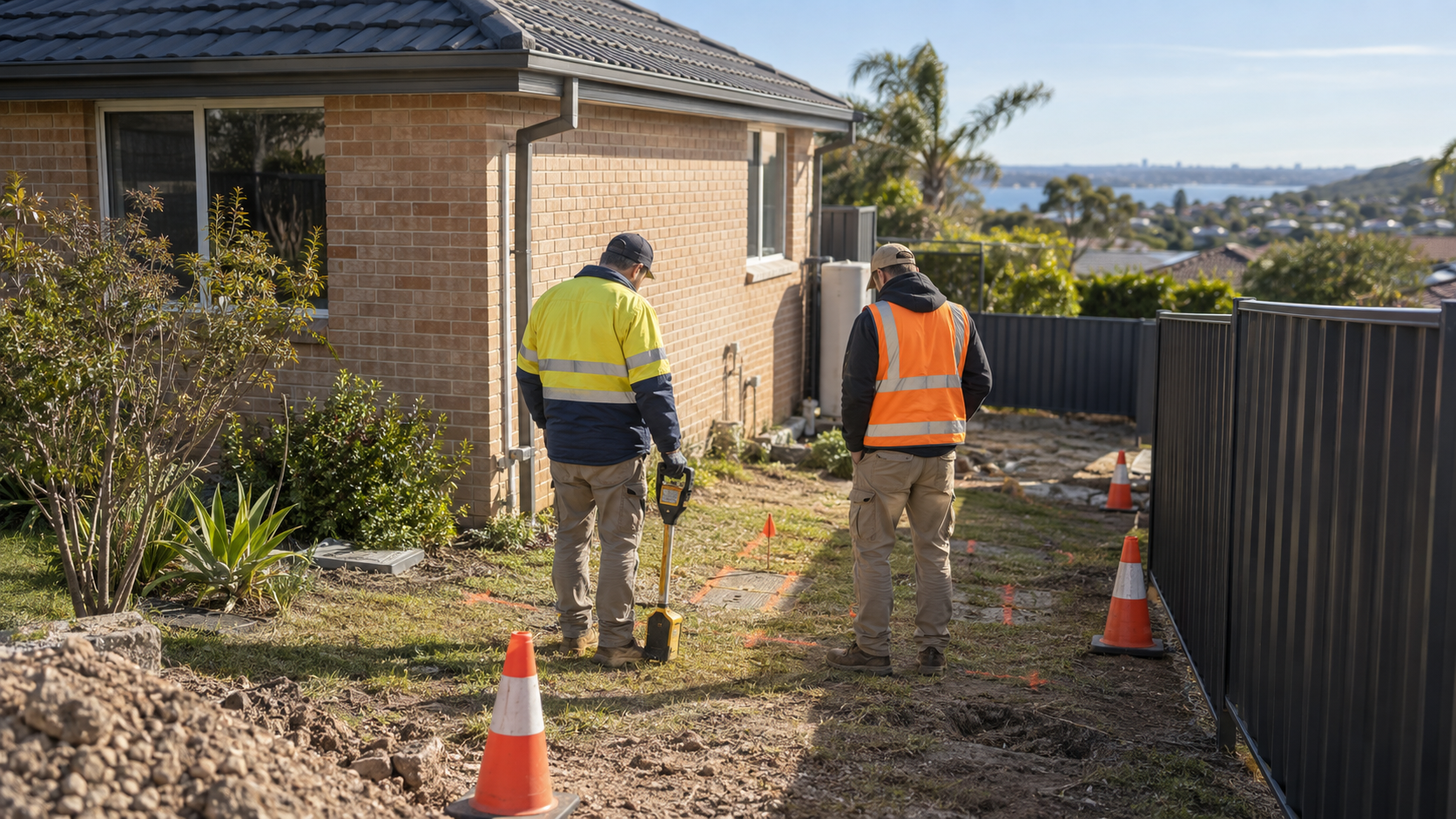
Before You Dig Australia: Check service risk before the offer feels safe
A site can look clean from the street while services quietly control the deal.
Sewer, water, stormwater, gas, electricity, telecommunications and overhead power can affect where you build, how you access the site, what needs relocation and how much contingency belongs in the feasibility.
Before You Dig Australia is not a full development approval pathway. It is a practical early safety and information step that helps investors stop treating unknown service risk as if it were zero.
Services are not background detail
BYDA explains that work on private properties can damage underground and overhead assets, causing service interruptions, delays, costly repairs and, in the worst cases, injury or death. For property developers, those same risks also become feasibility risks.
- an easement may reduce the useful building envelope;
- a sewer main may need protection, redesign or authority approval;
- a power pole or overhead line may constrain access, scaffolding or craneage;
- stormwater discharge may need a lawful connection rather than a convenient assumption;
- service relocation may need time, fees and specialist design.
A practical offer-stage check
Use the service check before the deal becomes emotional. A simple process is:
- Order the relevant underground plans and overhead powerline information for the exact property and adjoining frontages through BYDA's underground plan and Look Up and Live process.
- Mark known easements, pits, poles, mains and service routes on the site sketch.
- Ask whether the proposed driveway, subdivision line, building footprint or civil works cross any asset.
- Send unclear constraints to the engineer, surveyor, planner, builder or asset owner before relying on the yield.
- Carry a specific service-risk allowance, or make the offer conditional, where the information is incomplete.
TPC deal lens: unknown services are not upside
A clean feasibility does not mean the services are clean. It may only mean the services were not checked.
If a seller wants a price based on a ready-to-build development site, the service pathway should be visible enough to support that price. If the service pathway is still uncertain, reflect that uncertainty in the offer, due diligence period, contingency or decision to walk away.
Key Takeaway
Before You Dig is an early warning system, not a development approval. Use it to expose service questions before they become construction delays, redesign costs or safety problems.
Your Turn
On your next site, which service constraint would change your offer price fastest: sewer, stormwater, power, access or telecommunications?
Sources and boundaries
Sources checked 16 September 2026.
- Before You Dig Australia — Before You Dig: how it works Used for: BYDA free tools provide access to underground utility plans and Look Up and Live overhead powerline information; damaging assets can cause interruptions, delays, repairs, injury or death. (Checked 16 September 2026)
- Safe Work Australia — Excavation work model Code of Practice Used for: Excavation work should identify underground services and other hazards before work begins. (Checked 16 September 2026)
- NSW Planning Portal — Spatial Viewer terms and planning information notes Used for: Spatial planning information should be treated carefully and checked against official instruments and site-specific advice. (Checked 16 September 2026)
This article is general education, not personalised planning, legal, financial, tax, privacy, safety or building advice. Requirements and outcomes vary by jurisdiction, site, contract, structure and circumstances. Check current information with the relevant authority and appropriately qualified advisers.
 Learn with Jason & AmyBuild practical small-scale property development skills with experienced mentors.Enquire now
Rate this article
Guest rating: select 1 star for poor or 5 stars for great. No account is required.
Leave a comment
Join the discussion. Your email address will not be published.
Frequently asked questions
Is a BYDA enquiry the same as service approval?
No. It is an early safety and information step. Connection capacity, relocation costs and authority conditions still need confirmation from the relevant asset owner and consultants.
Should investors order utility plans before exchange?
For a serious development site, yes. Utility risk can affect design, civil costs, timing and whether the proposed access or building envelope is practical.
Do overhead powerlines matter for small developments?
Yes. Craneage, scaffolding, driveway works, tree clearing and construction access can all be affected by overhead assets and safe approach requirements.
Who should interpret the plans?
Use the plans as a prompt for professional review by the relevant engineer, surveyor, builder, asset owner or safety adviser where the risk affects the deal.
Does a BYDA plan replace engineering advice?
No. Treat it as an early information request. Engineers, surveyors, builders and asset owners still need to confirm clearances, protection works, relocation costs and approval requirements before you rely on the feasibility.
Loading comments…